About UNIMORE
Can you tell us a bit about UNIMORE and its core mission?
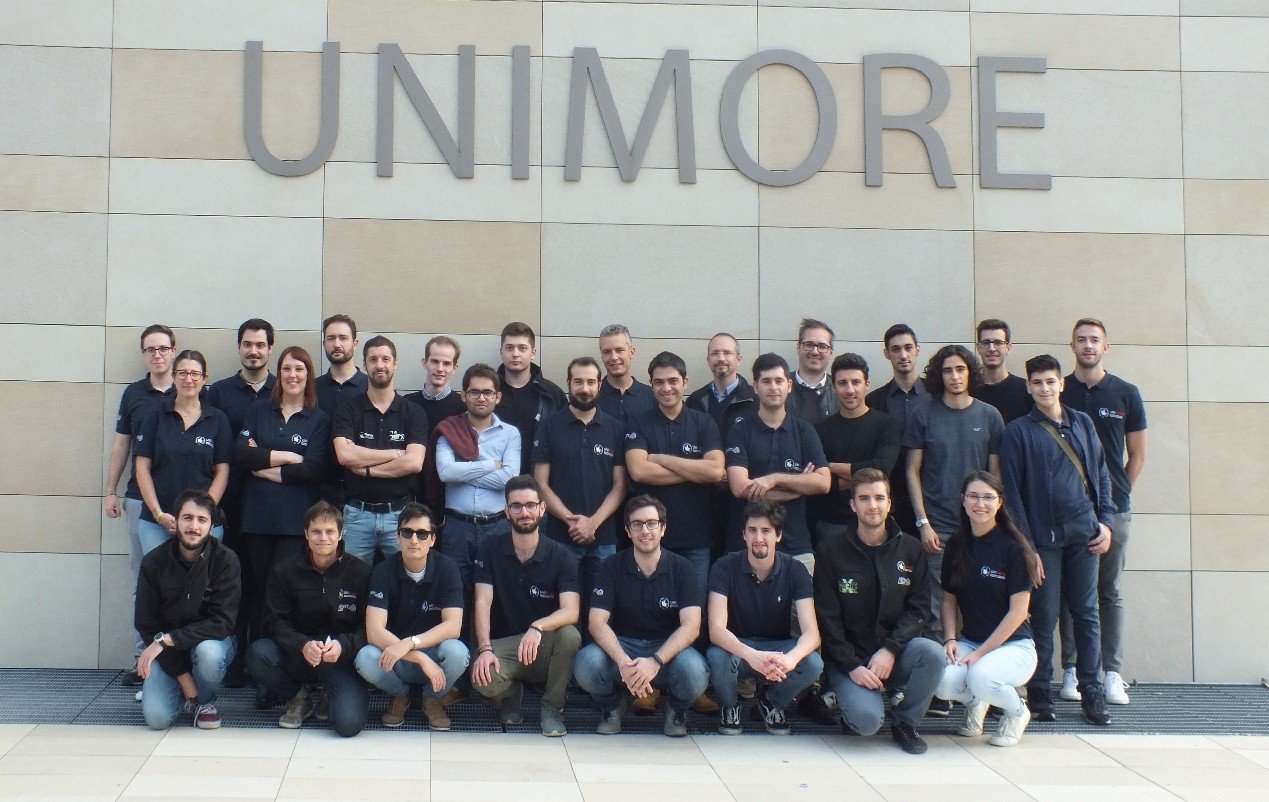
The University of Modena and Reggio Emilia (UNIMORE) recognizes the fundamental importance of research and pursues the goal of contributing to the well-being and development of society through the production of knowledge and the development of applications derived from research activities.
Research is considered a priority not only for the advancement of knowledge, but also as a key instrument to equip new generations with the skills needed to face societal challenges, also through the promotion of international collaborations.
One of UNIMORE’s distinctive features is the strong link between high-quality research and educational activities. This connection fosters culture, knowledge, and innovation, also by promoting entrepreneurship pathways and enhancing research infrastructures.
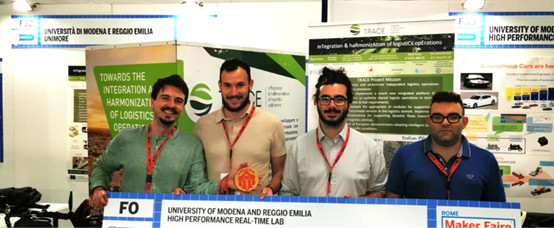
Within this context, Hipert Lab, the university’s High-Performance Real-Time Laboratory, aims to bring new technological ideas to life, transforming research outcomes into practical and impactful solutions.
What are the main products or services UNIMORE offers?
As a university research lab focused on real-time systems, we provide advanced solutions for performance optimization and resource management across heterogeneous hardware platforms.
Our expertise lies in adapting a single solution to multiple hardware architectures, ensuring full hardware utilization, improved performance, and optimized power consumption—key aspects for embedded, autonomous, and real-time systems.
How has your organisation evolved since its inception?
Over time, Hipert Lab has evolved from a research-focused laboratory into a multidisciplinary group capable of bridging theoretical research and real-world applications.
Through participation in national and European projects, the lab has expanded its expertise in real-time systems, autonomous platforms, logistics, and mobility, strengthening collaborations with industrial partners and public institutions.
Contribution to the TRACE Project
How did UNIMORE get involved with the TRACE project?
UNIMORE became involved in the TRACE project through its expertise in autonomous systems, real-time control, and intelligent mobility.
Within TRACE, the lab is developing an autonomous vehicle (AV) platooning solution for cargo bike systems, equipped with sensors, enabling a single operator to manage and guide multiple cargo bikes in logistics scenarios.
What specific role does your organisation play in the TRACE project?
UNIMORE is responsible for organizing two main demonstrations within the project:
- an urgent delivery scenario using drones with Difly, and
- a cargo bike platooning demonstration, aimed at optimizing last-mile logistics operations.
These demonstrations showcase how TRACE technologies can improve efficiency, sustainability, and responsiveness in urban logistics.
Can you describe any unique contributions or innovations UNIMORE has brought to the project?
By integrating TRACE technologies into traditional logistics applications, we introduce advanced capabilities such as real-time tracking, data-driven insights, and delivery route optimization.
Our work focuses on combining autonomy, coordination, and real-time data processing to enhance the overall efficiency and safety of logistics operations.
How does your involvement in TRACE align with its overall goals and mission?
UNIMORE’s participation in TRACE is fully aligned with its mission of transforming research into societal impact.
The project allows us to apply our expertise in real-time systems and autonomous mobility to real-world logistics challenges, while also fostering innovation, sustainability, and collaboration between academia, industry, and public institutions.
Vision and Impact
What is your long-term vision for the TRACE project?
Our long-term vision is to bring the developed cargo bike prototypes to a higher technological maturity, paving the way for real-world adoption and future industrialization.
How do you see the TRACE project impacting the industry and the community?
By enabling the coordinated use of multiple cargo bikes, TRACE has the potential to significantly reduce the reliance on delivery vans in urban areas.
This approach directly contributes to lower traffic congestion, reduced CO₂ emissions, and improved quality of life in cities, while maintaining efficient and flexible logistics services.
What are some of the key challenges you foresee in the project, and how do you plan to address them?
One of the main challenges is the development of a near-autonomous cargo bike prototype capable of operating safely in a platooning configuration.
Since the TRACE project started some time ago, we have tested our solutions on different vehicles, which has allowed us to better understand platform-specific limitations and constraints. This iterative process helps us refine the system and progressively improve reliability and performance.
Collaboration and Experience
How has the collaboration with other partners in the TRACE project been so far?
Collaboration with the project partners—especially those closely involved in achieving the core project objectives—has been highly stimulating.
Each partner contributed different perspectives and expertise, and during project-related workshops, a very positive atmosphere emerged, both professionally and personally. This strong collaborative spirit has further strengthened the sense of teamwork within the consortium.
Can you share any success stories or notable achievements from your collaboration within TRACE?
Together with CSEM, UNIMORE developed a new vision system prototype designed to help couriers avoid accidents. Although still at a prototype stage, it has strong potential for real-world applications with further iterations.
In collaboration with Spinitalia, we contributed to the development of a cargo bike prototype with autonomous capabilities.
Additionally, UNIMORE, together with the Municipality of Modena, carried out dissemination activities at major public events such as the Modena Smart Life Festival and conducted tests on closed infrastructures, including the Diagonale Verde cycle path currently being completed by the municipality.
Project Description and Values
In your opinion, what are the most important values that TRACE embodies?
TRACE strongly embodies values such as innovation, collaboration, sustainability, and efficiency, combining technological advancement with real societal needs.
If you had to describe TRACE in three words, what would they be?
Optimization, Logistics, Innovation.
How do you think TRACE stands out from similar initiatives in the field?
TRACE stands out by bringing together different logistics stakeholders within a single ecosystem, enabling them to collaborate and reach higher operational capabilities and reach foreign zones than they couldn’t individually.
Future Prospects
What are the next steps for UNIMORE within the TRACE project?
Our next step is to showcase TRACE’s potential through two demonstrators, highlighting both drone-based urgent delivery and cargo bike platooning.
How do you see your organisation’s involvement in the TRACE project evolving in the future?
We see our involvement evolving towards further experimentation, refinement, and potential technology transfer, building on the results achieved during the project.
What new opportunities do you believe TRACE will open up for UNIMORE?
TRACE opens up opportunities to develop new prototypes, further optimize autonomous and real-time systems, and create innovative solutions applicable to future smart mobility and logistics scenarios.
Personal Insights
What personally excites you the most about the TRACE project?
The possibility of seeing research results translated into real-world demonstrations that can positively impact cities and citizens is particularly exciting.
How do you stay motivated and inspired in your work with TRACE?
Working in a multidisciplinary and international consortium, where ideas are continuously exchanged and tested in real scenarios, is a strong source of motivation and inspiration.
Do you have any advice for other companies considering participating in collaborative projects like TRACE?
Collaborative projects like TRACE require openness, flexibility, and strong communication, but they offer unique opportunities to grow, innovate, and create solutions that would not be achievable alone.