Budapest, Hungary | 18–21 May 2026
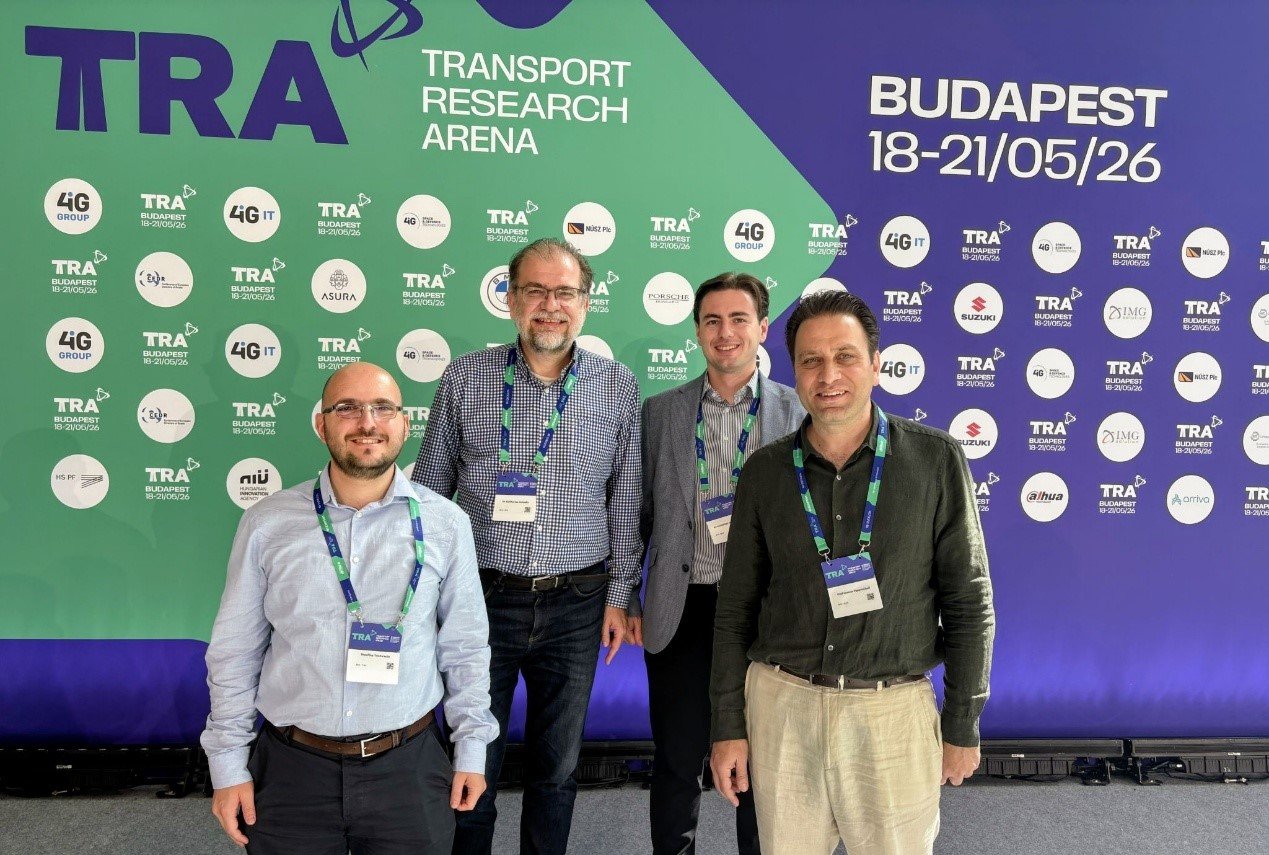
The TRACE project was successfully presented at the 10th Transport Research Arena (TRA2026), one of Europe’s most prestigious conferences on transport and mobility research. Held in Budapest, Hungary, the event brought together leading researchers, industry representatives, transport operators, technology providers, policy makers, and academia to exchange knowledge and discuss the future of sustainable, intelligent, and resilient transport systems.
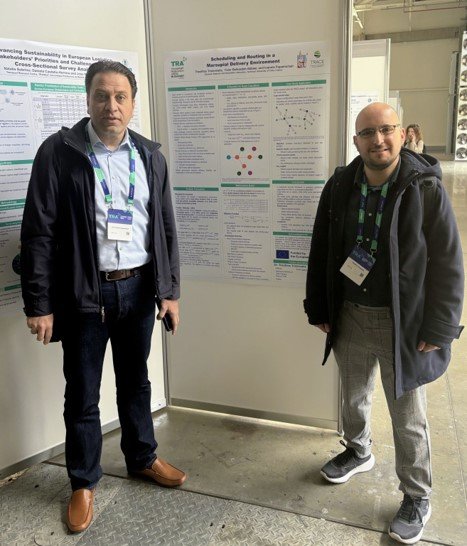
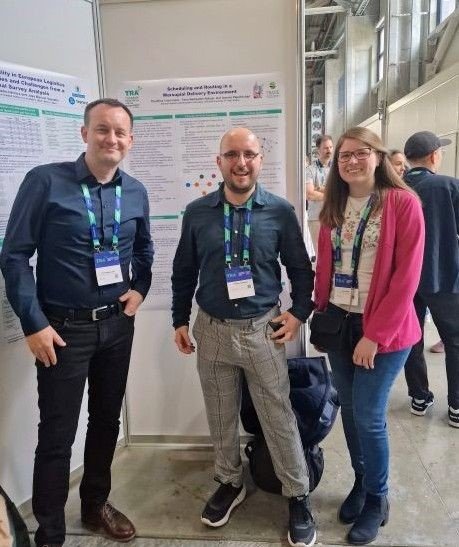
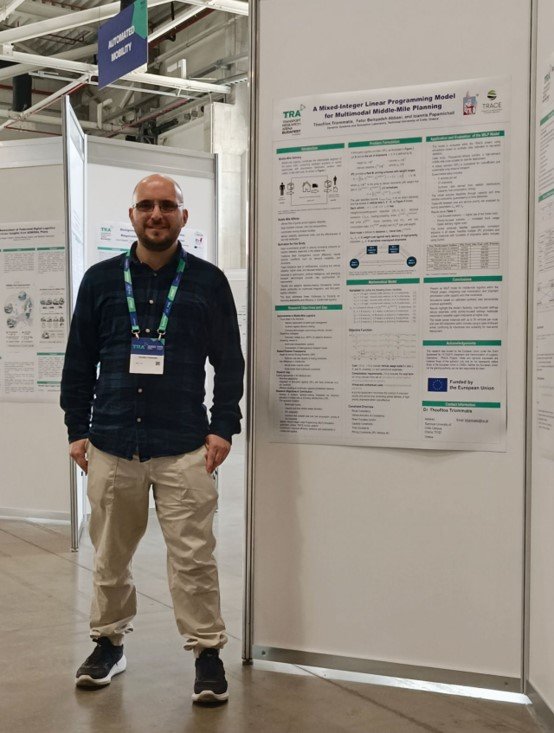
Representatives from the Technical University of Crete (TUC) showcased TRACE research through two scientific poster presentations, highlighting innovative optimisation models developed within the project to improve both middle-mile and last-mile logistics.
Advancing Last-Mile Logistics with Cargo Bikes and UAVs
The first poster, “Scheduling and Routing in a Marsupial Delivery Environment,” introduced an innovative framework for heterogeneous autonomous urban deliveries combining cargo bikes and Unmanned Aerial Vehicles (UAVs).
The proposed solution enables cargo bikes to transport UAVs through areas with flight restrictions, allowing drones to be deployed only when destinations cannot be efficiently reached by ground vehicles. The framework also introduces dynamic platooning of cargo bikes, enabling vehicles to merge and split during their routes while coordinating with UAV operations.
A heuristic routing approach, combined with a Mixed-Integer Linear Programming (MILP) optimisation model, determines the optimal assignment of bikes, UAVs, and shipments while considering operational constraints and key performance indicators. The presented results demonstrated efficient coordination, flexible routing strategies, and improved performance for complex urban logistics scenarios.
Optimising Multimodal Middle-Mile Transport
The second poster, “A Mixed-Integer Linear Programming Model for Multimodal Middle-Mile Planning,” focused on improving shipment transfers between cities through intelligent multimodal planning.
The presented optimisation model supports logistics operators in deciding whether to use their own vehicle fleets or outsource transportation through third-party logistics providers operating scheduled rail, maritime, or air services. By considering transportation costs, capacities, schedules, and operational constraints, the model enables dynamic decision-making that improves both flexibility and cost efficiency in middle-mile logistics operations.
Both optimisation models have been developed within the TRACE project and are implemented as pilot applications supporting the project’s vision of smarter, more sustainable, and data-driven logistics systems.
Promoting TRACE Research to the European Transport Community
Beyond the poster presentations, TRA2026 provided an excellent opportunity to engage with researchers, industry professionals, technology providers, and policy makers working on the future of transport and logistics across Europe.
The conference facilitated valuable discussions on digitalisation, artificial intelligence, multimodal transport, autonomous delivery systems, and sustainable supply chains, while creating new networking opportunities and strengthening collaboration between academia and industry.
Participation at TRA2026 significantly increased the visibility of TRACE within the European transport research community and demonstrated how advanced optimisation techniques can contribute to more efficient, resilient, and environmentally sustainable logistics operations.
TRACE congratulates the Technical University of Crete team for successfully presenting these innovative research results and contributing to the advancement of next-generation logistics solutions within the European transport ecosystem.