European logistics operates like a puzzle with missing pieces. A package traveling across borders passes through multiple independent companies, each managing their own vehicles and data separately. The result: delayed deliveries, wasted fuel, missed sustainability targets, and cities struggling to enforce emission regulations.
TRACE changes this. It’s a coordination platform that enables logistics companies to work together seamlessly without giving up their independence. Instead of fragmented networks, TRACE creates a unified system where shipments flow efficiently across company boundaries and transportation modes.
The platform works through four core capabilities. It collects real-time information from vehicles and systems, creating a unified view of the entire logistics network. It uses intelligent algorithms to optimize routes considering traffic, weather, and vehicle capabilities. It allows companies to share operational data securely without exposing competitive secrets. And it records all transactions transparently using blockchain technology, building trust among participants.
The benefits are concrete. Deliveries arrive faster. Carbon emissions drop through optimized routing and vehicle selection. Compliance with zero-emission zones becomes automatic rather than manual. Companies gain competitive advantage by offering sustainable delivery options that actually work economically.
TRACE has been validated through real-world demonstrations across Greece, Slovenia, and Italy. The platform is now ready for broader deployment across European cities and logistics networks.
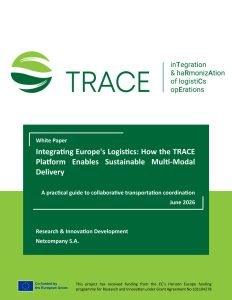
Today we’re releasing a new white paper that explains how TRACE works, why it matters for European logistics, and how organizations can leverage it to build more efficient, sustainable, and collaborative transportation networks. The paper is written for logistics professionals, city planners, and decision-makers.
Download the white paper to learn how European logistics can finally move beyond silos and into coordinated, sustainable operations.