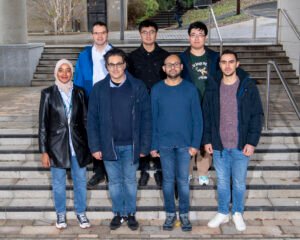
About the University of Glasgow – An Overview
Can you tell us a bit about the University of Glasgow and its core mission?
Founded in 1451, the University of Glasgow is one of the oldest and most prestigious universities in the English-speaking world, renowned for its long-standing tradition of excellence in research, teaching, and social contribution. Its core mission is to transform lives through education, research, and engagement, fostering innovation, critical inquiry, and global citizenship. The University is committed to tackling real-world challenges and advancing knowledge for the benefit of society, aligning its activities with the United Nations Sustainable Development Goals (SDGs).
What are the main products or services the University of Glasgow offers?
The University offers a comprehensive portfolio of undergraduate, postgraduate, and professional programmes across disciplines such as science and engineering, medicine and veterinary science, arts, social sciences, and business. Beyond degree programmes, the University provides continuing professional development (CPD), knowledge exchange, and industry collaboration services, alongside a vibrant ecosystem for innovation, start-ups, and global research partnerships.
How has your organization evolved since its inception?
Over its nearly six centuries of history, the University of Glasgow has evolved from a small theological college into a globally influential research-intensive institution, consistently ranked among the top 100 universities worldwide. In recent decades, Glasgow has strengthened its internationalisation strategy, established world-leading research centres, and advanced its reputation as a modern civic university—one that combines heritage with innovation to address the needs of the 21st century.
Involvement in the TRACE Project
How did the University of Glasgow get involved with the TRACE project?
The University of Glasgow became involved in the TRACE project as a core technical partner, invited for its strong expertise in data engineering, intelligent systems, and applied AI. Recognised for its track record in developing scalable digital infrastructure, the University joined the consortium to lead the technical development of key data-driven components essential to TRACE’s success.
What specific role does the University of Glasgow play in the TRACE project?
Specifically, the University of Glasgow’s primary role is the design and implementation of the automatic data ingestor, a cornerstone of the TRACE architecture. This system automatically connects to various stakeholders’ data systems, securely fetches and standardises relevant datasets, and transmits them to the TRACE backend for further processing. These data streams are crucial for the platform’s routing, optimisation, and decision-support functionalities, ensuring seamless integration across partners and real-time system intelligence.
Can you describe any unique contributions or innovations the University of Glasgow has brought to the project?
The University’s contribution goes beyond technical delivery. It has introduced innovative methods for automated data extraction, harmonisation, and transfer, significantly improving efficiency and reliability in multi-source data environments. The research outputs generated through this work have led to the publication of four peer-reviewed papers in international conferences and journals, disseminating TRACE’s methodologies and findings to the wider academic and industrial communities.
How does the University of Glasgow’s involvement in TRACE align with its overall goals and mission?
The University of Glasgow’s involvement in TRACE strongly aligns with its mission to advance knowledge and deliver research with real-world impact. By contributing cutting-edge data infrastructure to a collaborative European project, the University demonstrates its commitment to digital innovation, sustainability, and translational research—bridging academia and industry to tackle complex societal and technological challenges.
Vision and Impact
What is your long-term vision for the TRACE project?
The University of Glasgow’s long-term vision for the TRACE project is to contribute to the creation of a fully interoperable, intelligent, and sustainable European logistics ecosystem. By leveraging advanced data integration and AI-driven automation, the University aims to help build a platform that seamlessly connects independent logistics actors, enabling transparent collaboration, real-time decision-making, and optimisation of transport flows across Europe. This vision aligns with Glasgow’s broader commitment to digital innovation, sustainability, and research with societal impact, ensuring that the TRACE outcomes extend beyond technology to deliver measurable economic and environmental benefits.
How do you see the TRACE project impacting the industry and the community?
The impact of TRACE is expected to be transformative for both industry and the wider community. For industry stakeholders, TRACE will offer a unified and intelligent platform that reduces fragmentation, enhances operational efficiency, and lowers emissions through optimised multimodal logistics routing. The Greek, Italian, and Slovenian pilots will serve as real-world testbeds, demonstrating how AI-enabled coordination and data sharing can make logistics networks more resilient and cost-effective. For the community, TRACE will contribute to greener, smarter, and more connected supply chains, ultimately supporting the EU’s goals for sustainable mobility and digital transition.
Challenges and Collaboration
What are some of the key challenges you foresee in the project, and how do you plan to address them?
However, the University recognises several key challenges. These include integrating heterogeneous data sources across diverse stakeholders, ensuring data security and interoperability, and managing regulatory variations across countries. To address these, the University of Glasgow is focusing on developing robust data ingestion and harmonisation frameworks, adopting privacy-preserving architectures, and collaborating closely with policy experts to ensure compliance and scalability. Through continued research, technical innovation, and stakeholder engagement, the University aims to ensure that TRACE not only achieves its objectives but also sets new standards for intelligent, collaborative logistics in Europe and beyond.
How has the collaboration with other partners in the TRACE project been so far?
The University of Glasgow’s collaboration with other partners in the TRACE project has been highly productive and synergistic. Working alongside a diverse consortium of academic, industrial, and policy partners across Europe has fostered a truly interdisciplinary environment—one that combines technical innovation with practical industry insights. The close coordination among partners has been instrumental in aligning the project’s technical architecture with the real operational needs of logistics providers, ensuring that TRACE remains both visionary and implementable.
Can you share any success stories or notable achievements from your collaboration within the TRACE project?
A key success story emerging from this collaboration has been the development and integration of the automatic data ingestor, led by the University of Glasgow, in close cooperation with the pilot partner in Slovenia. This component has become a foundational element of the TRACE platform, enabling real-time data exchange and intelligent optimisation of logistics operations across different systems. The collaborative testing and validation process—where technical teams worked hand-in-hand with the pilot stakeholder—has not only demonstrated the feasibility of automated data harmonisation but also strengthened trust and engagement among consortium members. The outcomes of this joint effort have been shared through four peer-reviewed publications, reflecting the project’s scientific and practical contributions to the wider logistics research community.
What has been the most rewarding aspect of being part of the TRACE project?
The most rewarding aspect of participating in TRACE has been the opportunity to translate academic research into real-world impact. Contributing to a Europe-wide initiative that addresses the challenges of logistics integration, sustainability, and digital transformation has been both intellectually stimulating and socially meaningful. For the University of Glasgow, TRACE exemplifies the power of cross-border collaboration—bringing together expertise, innovation, and shared purpose to build a smarter, more connected, and sustainable logistics future.
Project Description and Values
In your opinion, what are the most important values that the TRACE project embodies?
At its core, the TRACE project embodies values of collaboration, innovation, and sustainability. It brings together diverse partners across Europe—academia, industry, and policymakers—to co-create a shared digital infrastructure for intelligent logistics. This collaborative ethos ensures that technological advancement goes hand in hand with inclusivity, transparency, and real-world relevance. TRACE also represents a strong commitment to environmental responsibility, aiming to reduce emissions and inefficiencies in transport through smarter, data-driven coordination.
If you had to describe the TRACE project in three words, what would they be?
If described in three words, TRACE is “intelligent, connected, sustainable.” It reflects a forward-looking vision of logistics where digital intelligence and human cooperation converge to optimise supply chains for both economic and societal benefit.
How do you think the TRACE project stands out from similar initiatives in the field?
What sets TRACE apart from similar initiatives is its holistic integration of technical, operational, and governance dimensions. Unlike projects focused solely on data or automation, TRACE addresses the full ecosystem of logistics transformation—from data harmonisation and AI-driven decision-making to stakeholder engagement, regulatory analysis, and business model innovation. The inclusion of real-world demonstrators in Greece, Italy, and Slovenia ensures that solutions are validated under authentic operational conditions, bridging the gap between research and practice.
For the University of Glasgow, TRACE exemplifies a project where research excellence meets impact, showcasing how interdisciplinary collaboration can accelerate Europe’s transition toward a more efficient, transparent, and sustainable logistics future.
Future Prospects
What are the next steps for the University of Glasgow within the TRACE project?
Looking ahead, the University of Glasgow’s next steps within the TRACE project focus on further enhancing the automatic data ingestor and expanding its integration with the pilot demonstrator in Slovenia. The team will continue refining data harmonisation techniques, improving interoperability between heterogeneous logistics systems, and supporting the deployment of AI-based optimisation modules that rely on the ingested data. In parallel, the University will contribute to the analysis and dissemination of results, ensuring that the methods, algorithms, and lessons learned from TRACE are shared across the research and industrial communities.
How do you see the University of Glasgow’s involvement in the TRACE project evolving in the future?
The University’s role within TRACE is expected to evolve from purely technical development to a strategic contributor to the project’s long-term digital infrastructure and governance vision. As TRACE matures, Glasgow will focus on translating its research outputs into scalable tools, academic publications, and industry collaborations, supporting the creation of a sustainable post-project ecosystem that continues beyond the project’s lifetime.
What new opportunities do you believe the TRACE project will open up for the University of Glasgow?
Participation in TRACE also opens new opportunities for the University of Glasgow in the fields of smart logistics, AI-driven data management, and digital transformation research. The experience and partnerships gained through TRACE lay the foundation for future European collaborations, joint innovation projects, and potential spin-off applications in areas such as intelligent transportation, supply chain analytics, and sustainability monitoring. Through continued engagement, the University aims to build on TRACE’s success to strengthen its position as a leader in applied AI and data systems for sustainable industrial innovation.
Personal Insights
What personally excites you the most about the TRACE project?
What excites us most about the TRACE project is its potential to transform the logistics landscape through intelligent connectivity and collaboration. The opportunity to see our research in data engineering and AI directly improve real-world logistics operations across Europe is deeply rewarding. TRACE allows us to bridge academic innovation with industry practice—turning complex technical ideas into tangible solutions that make supply chains smarter, more sustainable, and more resilient.
How do you stay motivated and inspired in your work with the TRACE project?
Motivation within the project comes from seeing collective progress—each milestone achieved through teamwork across different countries and disciplines reinforces the sense of shared purpose. The diverse expertise within the consortium continually inspires new thinking and creativity, while the societal relevance of TRACE—reducing inefficiency and environmental impact—adds a strong sense of meaning to our daily work.
Do you have any advice for other organisations considering participating in collaborative projects like TRACE?
For organisations considering participation in collaborative projects like TRACE, our advice would be to embrace openness, adaptability, and long-term vision. Successful collaboration requires transparent communication, respect for each partner’s strengths, and a willingness to learn from different perspectives. When partners approach a project not just as a contract but as a shared journey of innovation, the results can be both scientifically impactful and socially transformative.